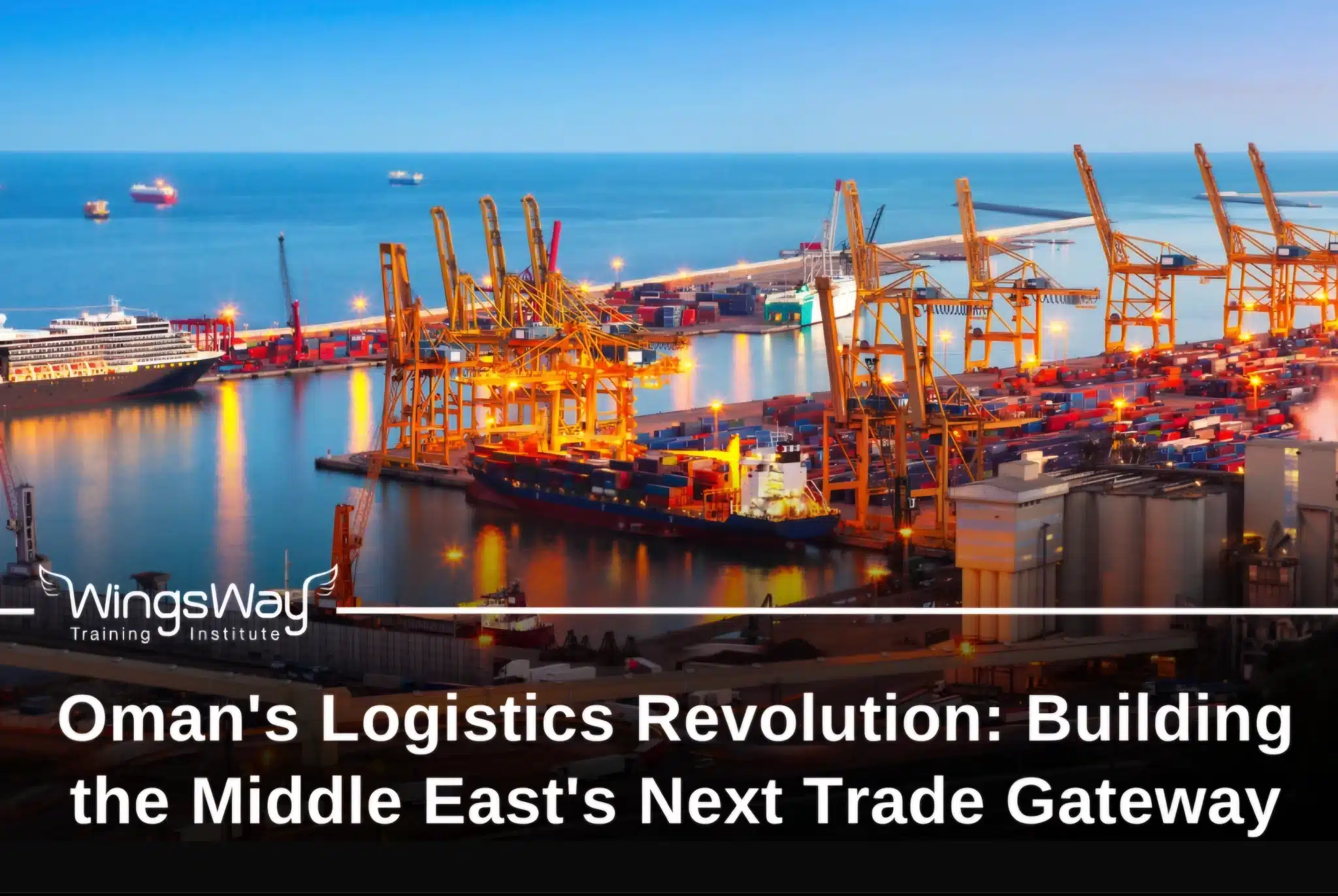
Oman’s Logistics Revolution: Building the Middle East’s Next Trade Gateway
How a Strategic Vision is Transforming Oman into a Regional Powerhouse
The global logistics landscape is witnessing a remarkable transformation, and Oman is positioning itself at the epicentre of this shift.
With ambitious targets, strategic investments, and a clear roadmap toward 2040, the Sultanate is rapidly evolving from a regional player into a formidable logistics hub that connects continents and drives economic prosperity.
The Numbers
In 2024, Oman’s logistics sector contributed approximately OMR 2.25 billion to the GDP, representing 5.9% of the national economy. But this is merely the beginning.
By 2040, the sector’s contribution is expected to reach about OMR 36 billion—a staggering sixteen-fold increase that underscores the transformative potential of Oman’s logistics ambitions.
The government plans to invest 2.5 billion rials ($6.5 billion) in its transport and logistics sector until 2025, demonstrating an unwavering commitment to infrastructure development. This investment isn’t just about building roads and warehouses—it’s about constructing the backbone of a diversified, future-ready economy.
👉 For logistics professionals, this translates into unprecedented career stability and growth opportunities. Infrastructure projects create immediate demand for project managers, operations specialists, and technical experts.
More importantly, these aren’t temporary construction jobs, but the foundation for permanent career pathways in port operations, warehouse management, and supply chain coordination.
Meanwhile, the Oman Logistics & Warehousing market is valued at approximately USD 1.00 billion in 2024, projected to grow to USD 1.10 billion in 2025, reflecting robust and sustained demand across the sector.
Oman’s Vision 2040: The Blueprint for Logistics Transformation
At the heart of Oman’s logistics revolution lies the National Logistics Strategy, aligned with the broader Vision 2040 framework. It’s a concrete action plan with measurable targets and clear timelines.
The strategy aims to expand logistics employment to 300,000 by 2040, while increasing the logistics sector’s contribution to Oman’s GDP to 14%. This represents more than doubling the current workforce and tripling the sector’s economic impact, creating a ripple effect across the entire economy.
👉 What this means for logistics professionals: The sector is actively seeking talent across all experience levels.
Entry-level positions in warehouse operations, freight coordination, and customs processing are abundant, while experienced professionals can command competitive salaries for specialised roles in supply chain analytics, cold chain management, and digital logistics.
The 300,000-employment target means the industry will absorb roughly 15,000 new professionals annually over the next 15 years—a sustained hiring boom that few sectors can match.
The strategic positioning is no accident. With 200-plus weekly sailings linking Sohar, Salalah, and Duqm to 86 global ports, and transhipment positioning along the Asia-Europe corridor, Oman has established itself as a critical node in global trade networks.
Geography is destiny, and Oman’s location at the mouth of the Arabian Gulf provides unparalleled access to markets spanning three continents.
Which Industries are Driving and Benefiting from the Logistics Boom?

4 industries that are benefiting from the logistics boom in Oman
-
Manufacturing and Industrial Growth
The Duqm refinery project offers significant transportation and logistics opportunities, while Sohar’s free zone has been at the forefront of Oman’s downstream manufacturing growth.
The symbiotic relationship between logistics and manufacturing creates a virtuous cycle—better logistics attracts manufacturers, which in turn drives demand for more sophisticated logistics services.
Sohar Port, in particular, has emerged as a manufacturing powerhouse. The petrochemicals, metals, and minerals industries rely heavily on efficient logistics networks to move raw materials in and finished products out.
Every ton of aluminium, every barrel of refined petroleum, and every container of processed goods requires seamless logistics coordination.
2. E-Commerce and Cold Chain Revolution
The digital economy’s explosive growth has created unprecedented demand for specialised logistics solutions. Cold chain logistics—essential for pharmaceuticals, food products, and temperature-sensitive goods—represents one of the fastest-growing segments. Oman’s strategic investments in refrigerated storage facilities and temperature-controlled transportation are positioning it as a regional cold chain hub.
E-commerce fulfilment centres are proliferating across Oman’s free zones, leveraging the country’s connectivity to serve regional markets with remarkable speed. Same-day and next-day delivery expectations are reshaping logistics operations, requiring sophisticated warehouse management systems and last-mile delivery networks.
👉 Career implications: E-commerce logistics demands a different skill set than traditional cargo handling. Professionals who master inventory optimisation algorithms, reverse logistics processes, and omnichannel fulfilment strategies are becoming highly sought after.
For logistics professionals, this means opportunities to specialise in one of the fastest-growing segments, with roles ranging from fulfilment centre managers to last-mile delivery coordinators commanding premium compensation packages.
3. Port Operations and Maritime Services
In February 2025, Salalah Port inaugurated a $300m expansion, increasing capacity from 4.5m TEUs to 6.5m TEUs. This massive capacity boost includes berth and yard expansions, new access roads, electrical substations, and 2000 additional reefer plugs, along with 10 new ship-to-shore cranes to accommodate ultra-large container vessels.
The port’s expansion exemplifies how infrastructure investments create multiplier effects throughout the economy.
Shipping lines benefit from increased capacity, importers and exporters enjoy faster turnaround times, and thousands of jobs are created in port operations, customs brokerage, freight forwarding, and related services.
👉 For logistics professionals, port expansions mean diverse career pathways: terminal operators managing sophisticated crane systems, logistics coordinators optimising vessel schedules, customs specialists expediting clearances, and supply chain planners coordinating multi-modal transportation.
Each 1 million TEU increase in port capacity typically generates 500-700 direct logistics jobs, plus thousands more in ancillary services.
4. Free Zones: Catalysts for Economic Activity
Oman’s free zones—Salalah, Sohar, and Khazaen Economic City—serve as logistics accelerators, offering regionally competitive incentives that attract international businesses.
These zones provide 100% foreign ownership, tax exemptions, streamlined customs procedures, and world-class infrastructure that make them ideal locations for regional distribution centres.
Companies establishing operations in these free zones benefit from Oman’s extensive network of free trade agreements and preferential market access, using the Sultanate as a springboard to reach consumers from East Africa to South Asia.
Who’s Winning in Oman’s Logistics Boom?
Asyad Group: The National Champion
In 2024, Asyad Group accelerated its global growth strategy, expanding its logistics operations into new markets and reinforcing its position as a global integrated logistics provider at the heart of international trade.
As Oman’s state-owned logistics conglomerate, Asyad operates ports, manages free zones, provides shipping services, and offers end-to-end supply chain solutions.
Asyad’s integrated approach—controlling key infrastructure while offering commercial logistics services—creates synergies that benefit the entire ecosystem. Their investments in digitisation, automation, and sustainable practices are setting new standards for the regional logistics industry.
Private Sector Players and International Partnerships
Third-party logistics (3PL) providers are experiencing unprecedented growth as businesses increasingly outsource complex supply chain functions.
International Transportation Management contributed 53% of the Oman third-party logistics market in 2024, highlighting the sector’s maturity and sophistication.
International logistics giants are establishing regional headquarters in Oman, attracted by the strategic location, improved infrastructure, and business-friendly regulations.
These partnerships bring global expertise, advanced technologies, and best practices that elevate the entire sector’s capabilities.
💡The professional advantage: Working for international logistics firms in Oman offers exposure to global standards, cutting-edge systems, and career mobility across regions. Professionals gain certifications, training on world-class platforms, and experience that makes them competitive globally.
Many international firms offer structured career progression, sending high-performers to overseas assignments and leadership development programs—opportunities rarely available in purely domestic operations.
Small and Medium Enterprises: The Hidden Beneficiaries
Beyond the headline-grabbing mega-projects, thousands of SMEs are thriving in Oman’s logistics ecosystem. Customs brokers, freight forwarders, trucking companies, warehouse operators, and specialised service providers are experiencing robust demand.
These businesses form the connective tissue of the logistics network, providing essential services that keep goods moving efficiently.
⭐ Entrepreneurial opportunities for professionals: Experienced logistics professionals are increasingly launching their own ventures—specialised courier services, niche warehousing solutions, customs consulting firms, and technology-enabled freight aggregators.
The barriers to entry are lower than ever, with free zone licenses, digital platforms reducing overhead, and abundant client demand. For professionals with industry knowledge and entrepreneurial spirit, Oman’s logistics boom offers pathways beyond traditional employment.
Logistics Training Centres: Building the Talent Pipeline for Tomorrow
Perhaps the most critical—yet often overlooked—component of Oman’s logistics transformation is human capital development. Infrastructure without skilled workers is like building highways without cars.
A major goal of the strategy is to create 300,000 new jobs by 2040 through investment in workforce development and training programmes. This ambitious target recognises that logistics excellence requires more than physical infrastructure—it demands a highly skilled workforce capable of operating sophisticated systems and adapting to evolving technologies.
For aspiring and current logistics professionals, this focus on training represents a golden opportunity. The government and private sector are investing heavily in upskilling programs, many offering subsidised or free logistics training for nationals. This means professionals can continuously upgrade their capabilities without bearing the full cost—an investment in their future earning potential and career mobility.
The Emergence of Specialised Logistics Training Institutions in Oman
The Oman Logistics Academy represents a new initiative dedicated to the development of the Sultanate’s logistics services sector, established specifically to address the sector’s growing talent needs.
This institution, along with partnerships between international training organisations and local entities, is creating comprehensive learning pathways that span entry-level positions to executive leadership.
The curriculum encompasses everything from warehouse operations and inventory management to supply chain optimisation and digital logistics platforms.
Students gain hands-on experience with the same technologies used in modern logistics operations—warehouse management systems, transportation management software, and emerging tools like IoT sensors and blockchain-based tracking systems.
💡 The professional edge: Graduates from these programmes enter the workforce with practical, job-ready skills rather than just theoretical knowledge. They’re familiar with industry-standard software, certified in safety protocols, and trained in customer service excellence.
For mid-career professionals, executive education programmes offer pathways to leadership roles, covering strategic supply chain design, international trade regulations, and business development—skills that translate directly into promotions and salary increases.
Closing the Skills Gap Through Public-Private Collaboration
The Oman Logistics Association plays a pivotal role in coordinating workforce development efforts, bringing together government agencies, educational institutions, and private sector employers to ensure training programmes align with industry needs. This collaborative approach prevents the skills mismatch that often plagues rapidly growing sectors.
Training programmes focus not only on technical skills but also on soft skills crucial for logistics success—problem-solving, communication, customer service, and adaptability. As automation and artificial intelligence reshape logistics operations, workers need skills that complement rather than compete with technology.
International certifications and partnerships with global logistics education providers ensure Omani professionals meet international standards, making them competitive in regional and global job markets.
👉 Career portability: Professionals earning globally recognised certifications to gain credentials that open doors across the GCC and beyond, such as:
For logistics professionals, this means career security isn’t tied to a single employer or even a single country. Your skills become portable assets, enabling lateral moves, international opportunities, and continuous upward mobility.
The Road Ahead: Challenges and Opportunities
Oman faces challenges—regional competition from Dubai and Jeddah, geopolitical uncertainties, continuous infrastructure upgrades. Yet opportunities outweigh challenges.
The strategy focuses on simplifying customs procedures, reducing clearance times, and fostering business-friendly environments. Combined with infrastructure investments, this creates compelling value propositions for regional operations.
Digital technologies—automated ports, AI-powered supply chain optimisation, smart systems, paperless trade—position Oman at the forefront of logistics innovation.
💡 The digital imperative: Technology elevates logistics workers rather than replacing them. Professionals who embrace digital tools become force multipliers. The ability to interpret data analytics, operate automation, and leverage AI for decisions is becoming as fundamental as completing bills of lading. Digital literacy today means leading tomorrow with senior positions and premium salaries.
Your Moment is Now: Join the Revolution
Oman’s transformation into a regional logistics hub is happening now. From expanded berths at Salalah Port to strategic training partnerships, every element is aligning toward 2040’s ambitious goals.
WingsWay: Your Gateway to Logistics Excellence
In a decisive move to strengthen Oman’s logistics talent pipeline, the Oman Logistics Academy recently partnered with WingsWay Training Institute, a Dubai-based leader in logistics and supply chain education. This collaboration delivers internationally accredited certification programmes in logistics, supply chain management, and related fields, directly supporting Vision 2040’s goal to develop skilled professionals for the sector.
WingsWay is a CILT Accredited Training Provider offering CILT Qualifications from Level 2 to 6, founded by senior logistics and transport industry professionals. As an award-winning institute, WingsWay transforms theoretical knowledge into practical, job-ready skills that employers actively seek.
What sets WingsWay apart is its industry-centric approach. Students don’t just learn logistics theory—they gain hands-on experience with the systems, processes, and technologies that drive modern supply chains. From CILT certifications to CSCP preparation, WingsWay’s logistics courses align perfectly with the competencies Oman’s booming logistics sector demands.
For professionals in Oman, this partnership eliminates barriers. You no longer need to travel abroad for world-class logistics education. The credentials that open doors across the GCC and globally are now accessible locally, at competitive rates, with flexible learning options designed for working professionals.
The logistics revolution in Oman isn’t waiting. Neither should you.
Whether you’re launching your logistics career, pivoting from another industry, or advancing to leadership, the opportunities are real, substantial, and time-sensitive. With 15,000 new positions annually through 2040, the sector needs qualified professionals now.
Ready to Position Yourself at the Center of Oman’s Logistics Boom?
Explore internationally accredited logistics and supply chain programmes at WingsWay Training Institute.